

Paradise Diving Bali: From old Contao to a digital travel companion
From the first underwater image through dive-site selection to a personal travel enquiry.
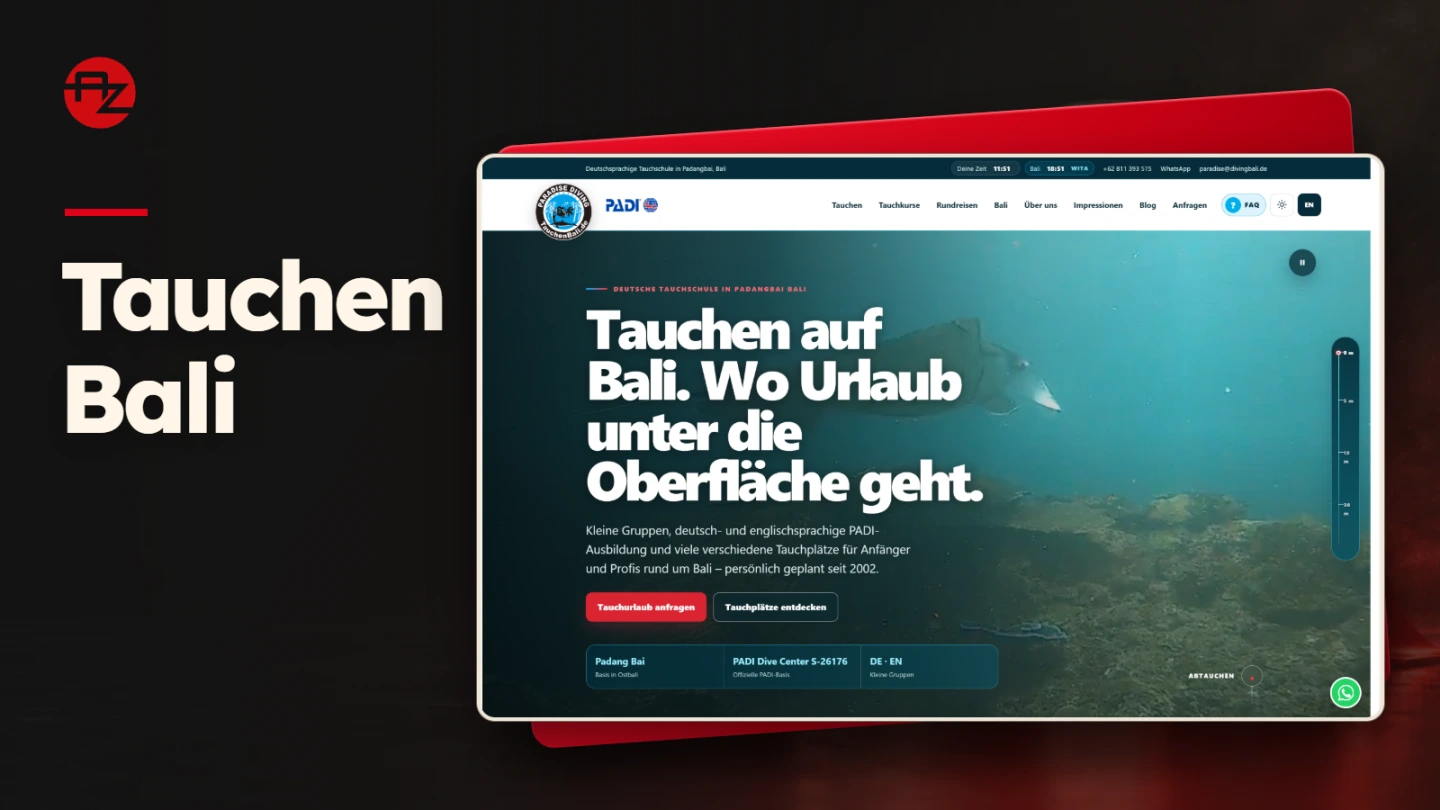
For Paradise Diving Bali, a very old Contao website has become a digital travel companion. The new site brings together dive sites, training, travel planning and personal enquiries. Since the relaunch on 3 October 2026, guests can access the German version at www.tauchenbali.de and the English version at www.paradisedivingbali.com. The familiar addresses remain. What visitors can do there has grown considerably.
A dive centre needs more than attractive underwater photographs and a telephone number. Guests want to know which sites suit their experience, which course makes sense and how to combine diving with accommodation, transfers or a round trip. Those questions were our starting point. The new website takes visitors from their first impression through practical information to a suitable, non-binding enquiry.
At Agentur Zentral, we aligned design, content and functionality with that journey. This project report covers the relaunch and the development that followed. The course details added later and the move to our own Website Builder are part of that story too. Together, they show how a change of system became a website that continues to develop.
A distinctive visual identity for a real dive centre
Paradise Diving Bali is a German-speaking dive centre in Padangbai on Bali's east coast. Its website should convey personal planning and the different experiences available there. We therefore avoided imposing a generic travel template on the existing content. Underwater photographs, the dive centre, the team and the actual speedboat Jenny give the site its own character.
A manta video introduces the homepage. Large images, animated transitions and a depth indicator along the side draw on the experience of diving. That visual language continues through the other pages. At the same time, the next steps remain clear: discover dive sites, compare courses or enquire about your holiday.
Matching images to their subjects mattered to us. A photograph of Jenny should show Jenny. An image of the dive centre should belong to this business. Authentic client photographs establish a connection that an unrelated attractive image could not replace. Galleries and enlarged images also let visitors take a closer look.
Discover, filter and compare a wide variety of dive sites
One of the most substantial additions combines an interactive map, a regional directory and detailed dive-site pages. The dive-site overview provides access to a wide variety of dive sites across different regions. The map shows the sites and the dive centre in Padangbai. Visitors can follow its markers to the corresponding information.
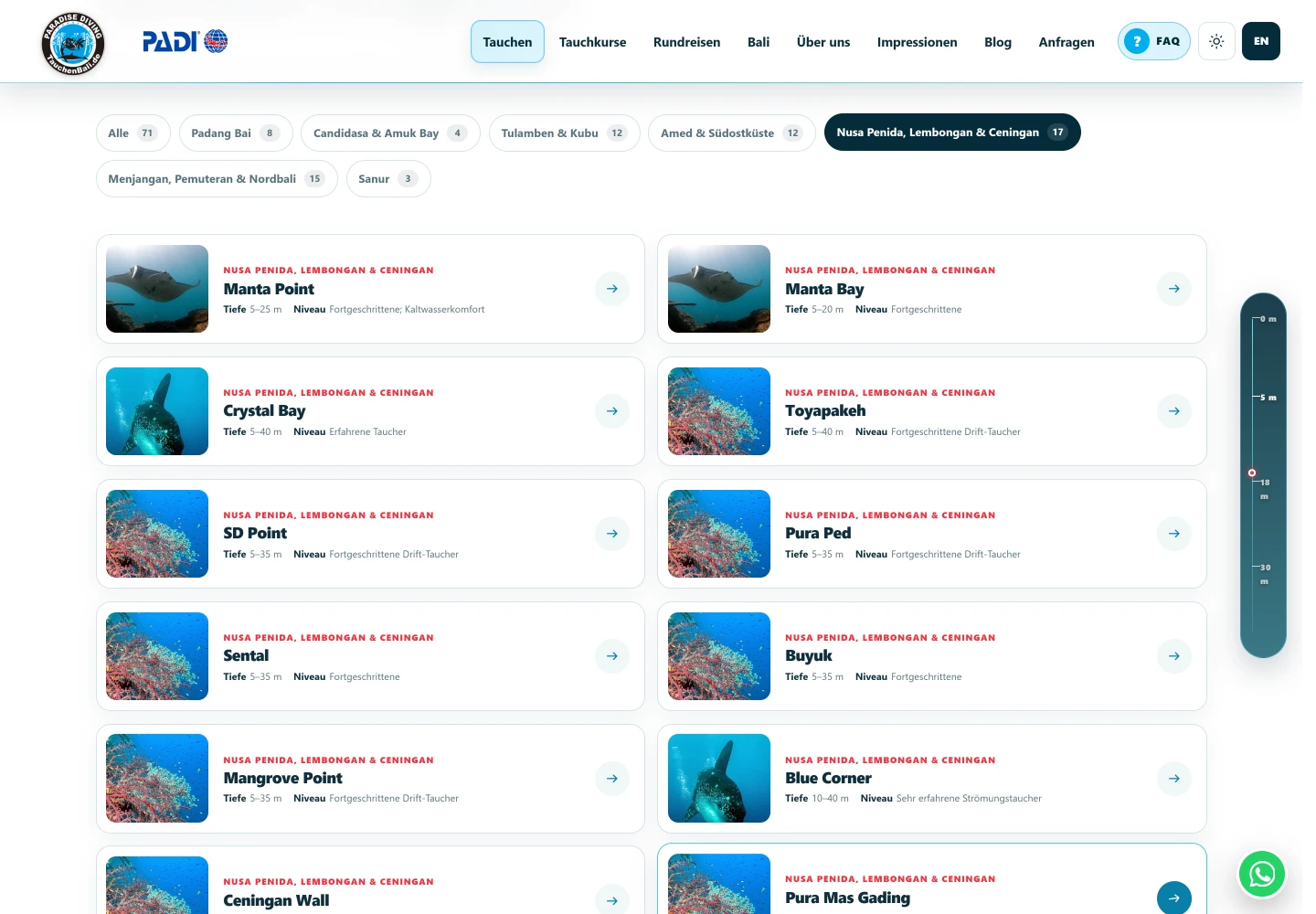
The regions range from Padang Bai, Tulamben and Amed to Nusa Penida and North Bali. Guests who already have a holiday region in mind do not need to search the entire list themselves. The regional filter narrows it to the relevant entries. Nusa Penida, Lembongan and Ceningan, for example, can be selected as a regional group. Resetting the filter restores the complete overview.
Entries combine names and images with depth ranges and experience levels. This helps with initial orientation: a wreck, a macro site and a boat dive affected by currents suggest different expectations for a holiday. Guests still agree the actual choice with the dive centre personally. The website prepares that conversation without replacing the local briefing or an assessment of current conditions.
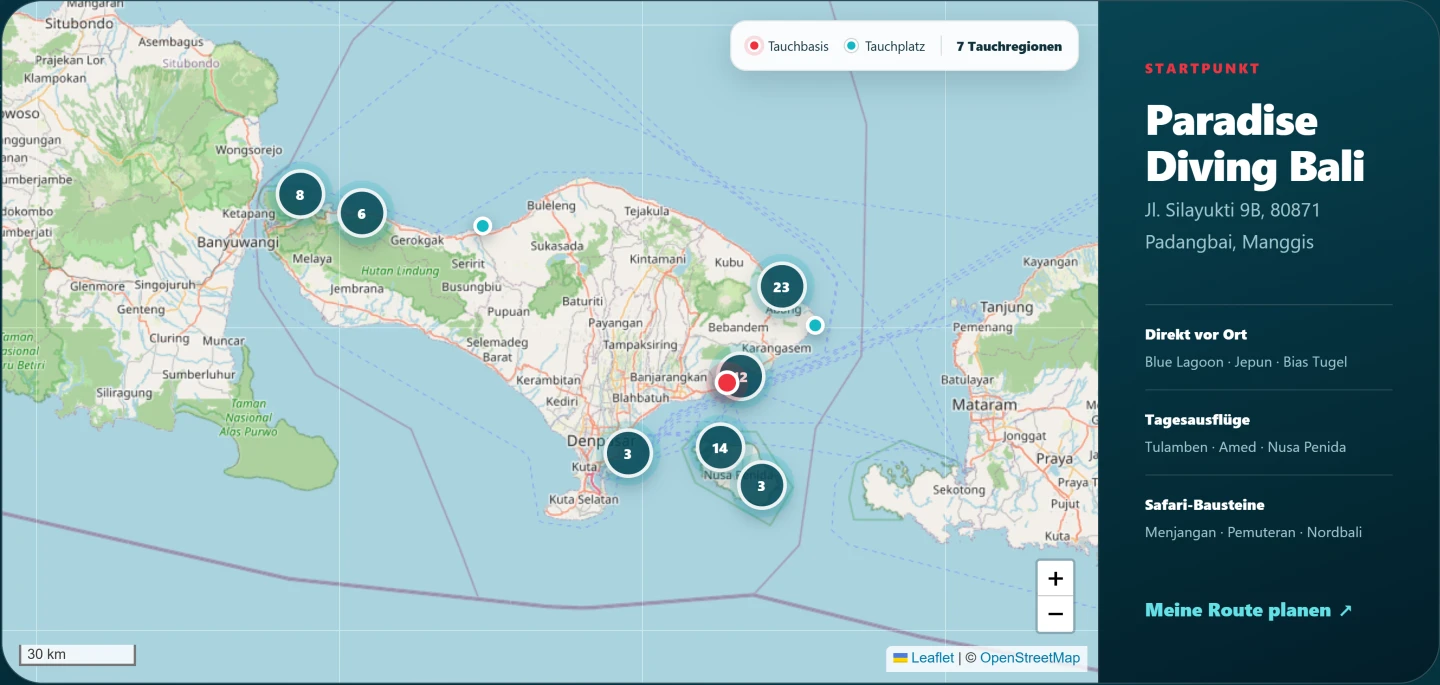
Ten original dive-site maps from the area provide another perspective. They show selected reefs and wrecks differently from the geographical map. Each illustration can be opened separately at full size. The island overview and detailed maps therefore serve different purposes: one puts destinations in context while the other helps explain the layout of a particular site.
New features with a clear purpose
| Area | What visitors can do |
|---|---|
| Interactive map | Locate dive sites and open their corresponding guides. |
| Regional dive-site finder | Narrow the varied selection of dive sites to the preferred region. |
| Searchable FAQ | Search 72 answers by keyword and topic. |
| Prices with currency guidance | Compare services and additional options and understand the dated rupiah reference amount. |
| Personal travel enquiry | Provide travel dates, accommodation area, experience and interests together. |
| Photographs, maps and videos | Get to know the actual dive centre and selected diving areas in more detail. |
| Appropriate language version | Switch between German and English content. |
| Course details added later | Review the programme, requirements and included services and enquire about the selected course directly. |
How these features work together is what matters. A map alone does not answer a price question. A price alone does not explain a course programme. A general contact field does not know what a visitor previously selected. We therefore connected the content and the routes through it. A feature becomes useful when it answers the next question at the right point.
72 answers without searching through numerous pages
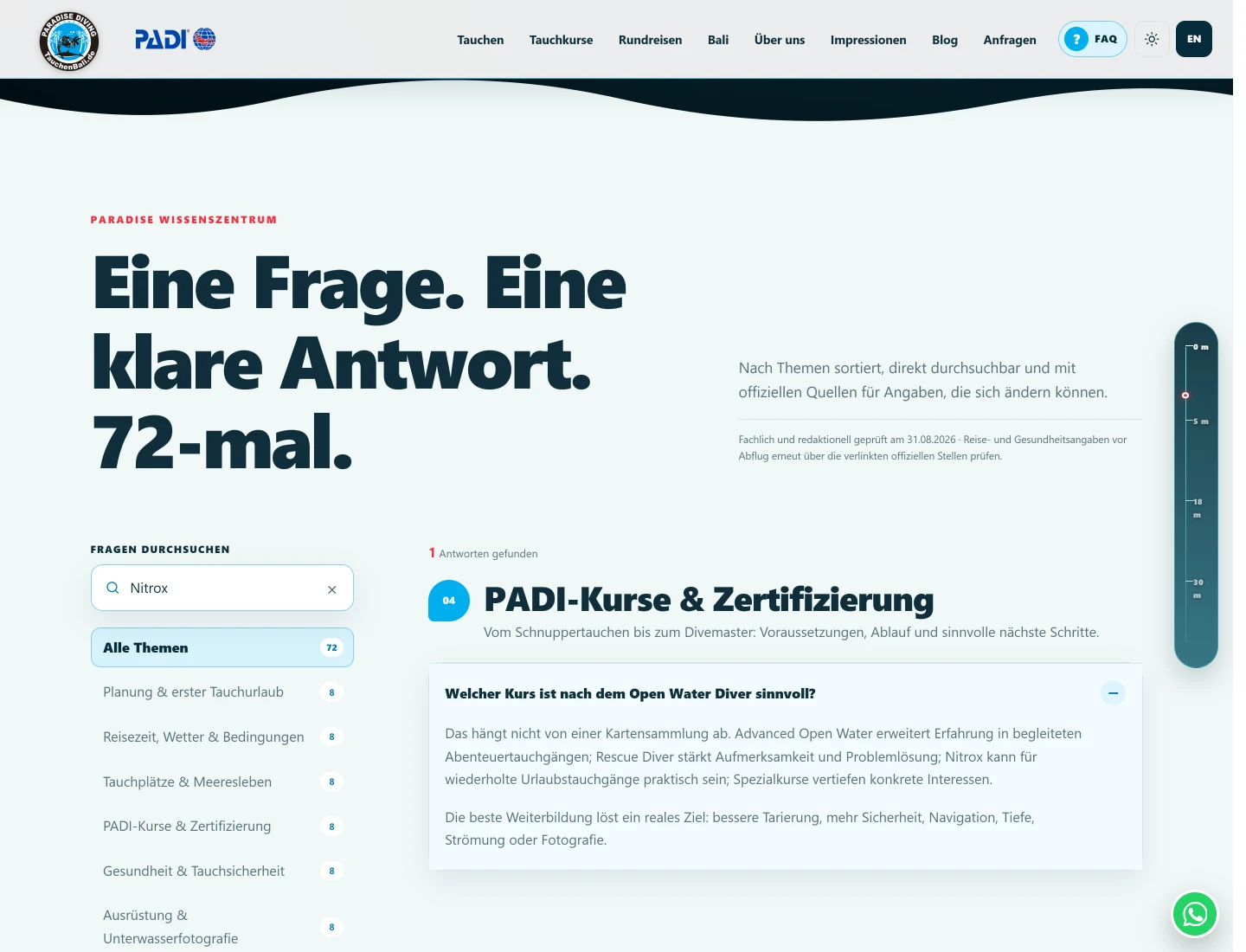
A diving holiday raises many small questions. Not every one calls for an immediate message to the dive centre. The Bali diving FAQ therefore brings together 72 answers. Visitors can narrow them by topic and enter a search term as well. The results change directly on the same page.
Searching for “Nitrox”, for example, finds the relevant answers. If a term produces no results, the interface makes that state clear. The search can then be cleared again. This may sound modest, but it saves visitors from working through several menus and also helps guests who cannot yet describe what they want using the appropriate technical term.
The FAQ does not replace personal advice. It addresses recurring questions and provides a better starting point for individual decisions. Alongside the main collection, important pages include further questions in context. Someone exploring a course does not need to leave that part of the site to find basic information.
Make prices understandable and put currency in context
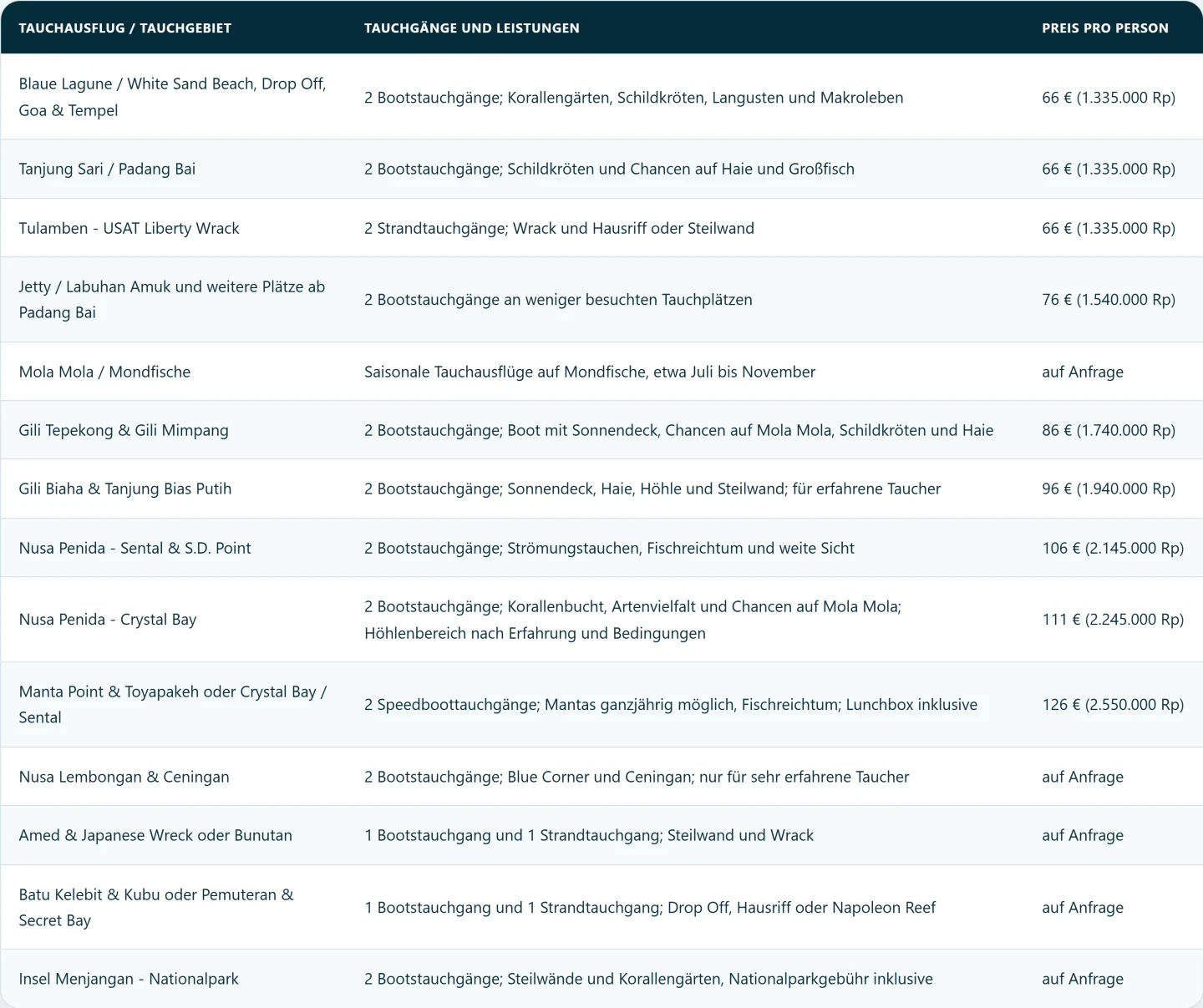
The diving price pages provide more than an individual amount. Guests want to understand which services are included, which equipment is covered and which additional options may be relevant. The presentation therefore brings prices and scope together. That supports a more meaningful comparison than an isolated figure beside an excursion name.
The German version supplements euro amounts with rupiah guidance. The English version uses the corresponding rupiah presentation. Conversion draws on the published ECB reference rate and states its date. Amounts are rounded to IDR 5,000 according to the agreed rule. The dive centre's personal quotation remains binding.
The exchange-rate information is updated automatically. A displayed reference amount can therefore be traced to a source and date. What matters most to visitors is understanding additional services and the basis of the price. This does not imply a guaranteed bank rate or an unchanging final price for every trip.
An enquiry that already considers the holiday
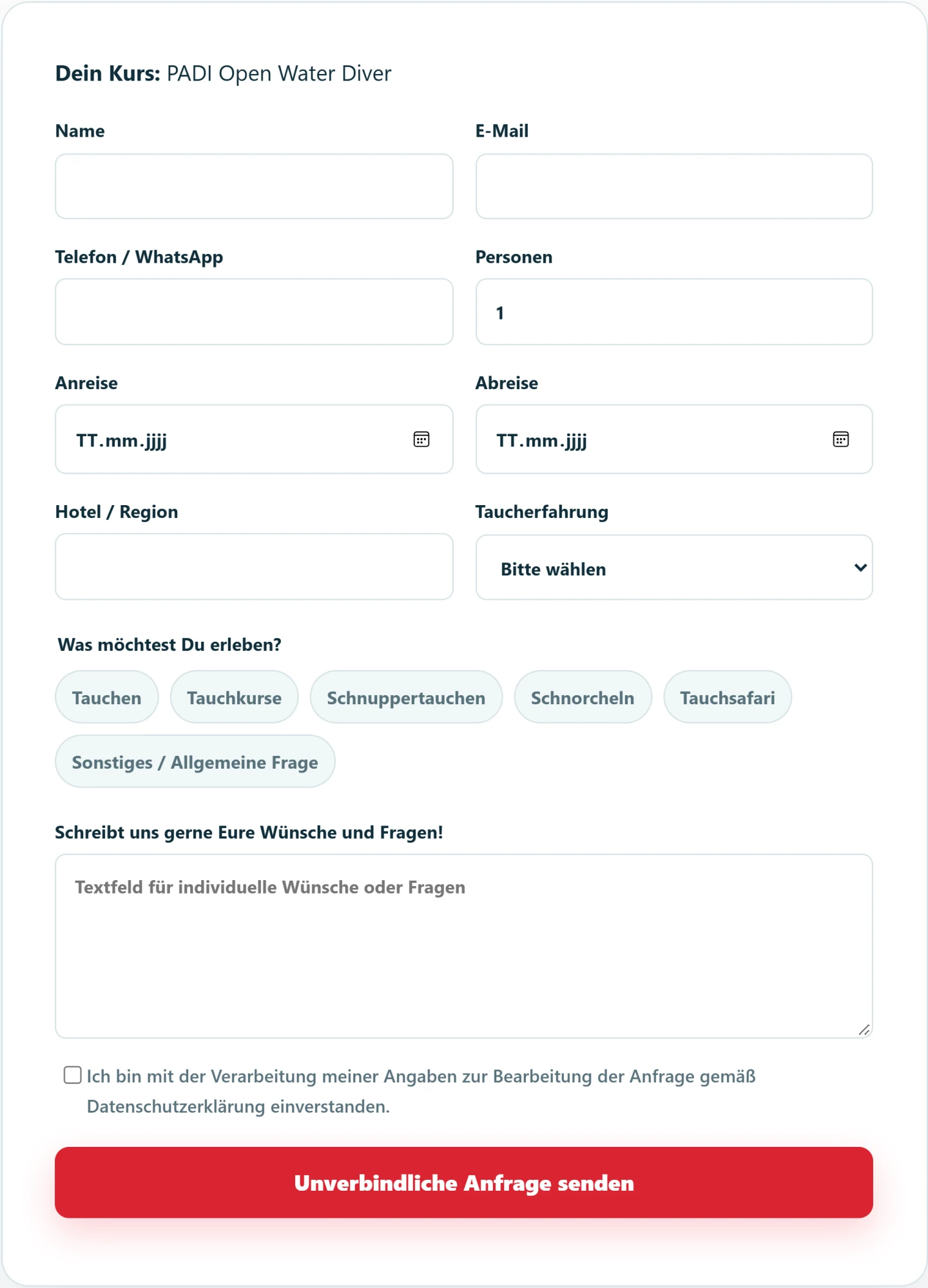
People planning a diving holiday rarely begin with a fully specified order. Their travel dates may be fixed while their accommodation is still undecided. An experienced diver may be travelling with someone who wants to try diving for the first time. The enquiry form brings that information together without requiring an immediate purchase.
Alongside contact details, it asks for the number of guests, arrival, departure, hotel or region and diving experience. Interests can include diving, courses, trial dives, snorkelling or a safari. A free-text field leaves room for individual wishes. This gives the dive centre a better starting point for its personal response.
The enquiry is expressly non-binding. The website does not promise an already confirmed place or a completed booking. Questions, a quotation and the specific agreement each retain their own place in the process. That suits a provider who tailors programmes to people, their experience and their travel plans.
Developed further since the relaunch: courses with their own enquiry route
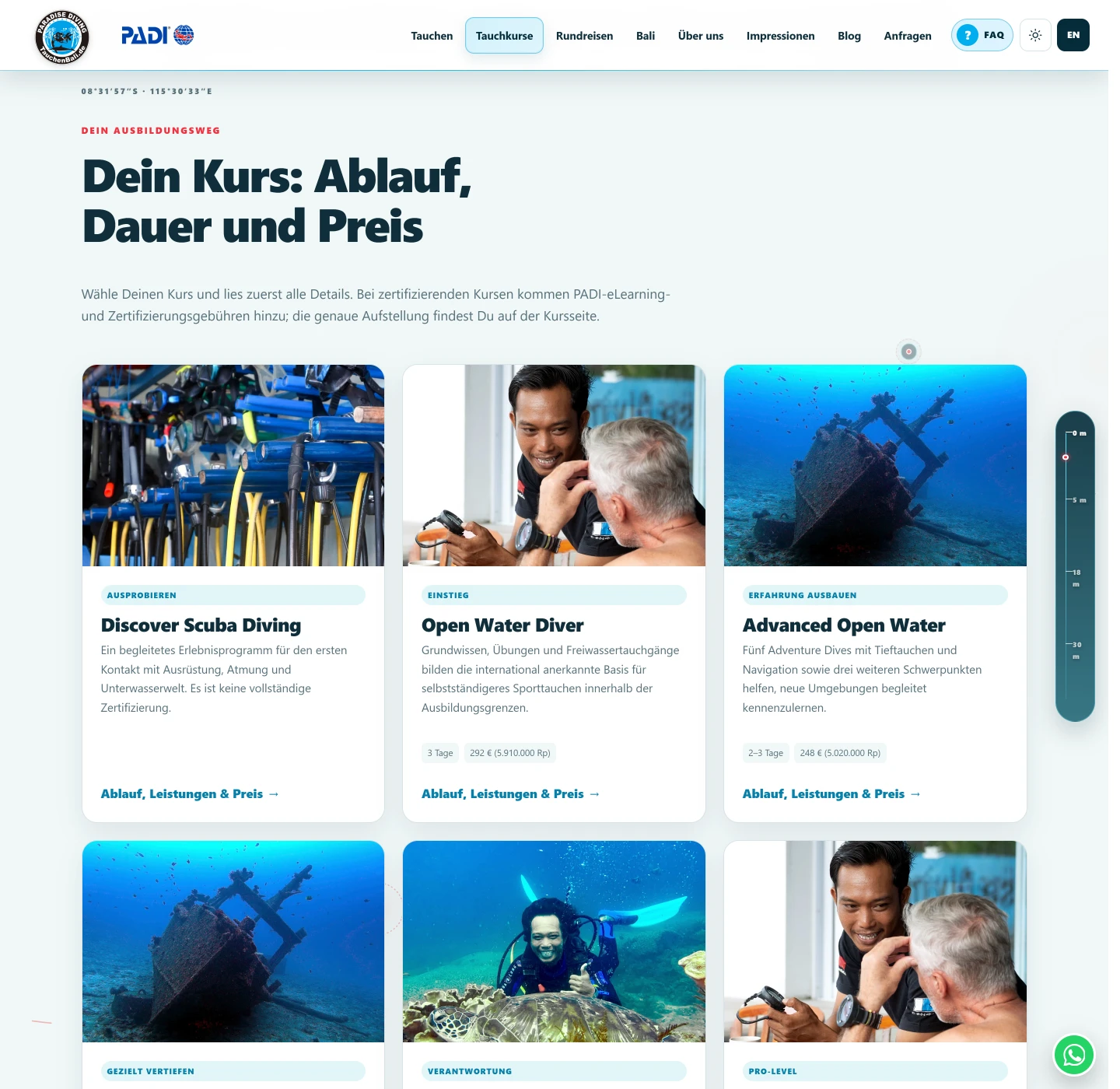
On 17 October 2026, we specifically expanded the course journey. Dedicated detail pages were added for Open Water Diver, Advanced Open Water, Rescue/EFR, Divemaster and Specialties. This addition followed the relaunch and is described here as a further development step.
The course overview first leads visitors to the relevant information. They can see which training matches their interests. Each detail page explains the programme, requirements, duration, services and price. Someone considering their first dive needs different guidance from someone planning professional training.
The next step reflects that choice. The form on each course page automatically includes the course name in the enquiry. Guests do not need to explain again which course they have just been considering. At the same time, course information and the price list draw on the same existing price data. This avoids unnecessary inconsistencies between the general overview and a specific detail page.
We also addressed small practical details. Travel dates appear in an understandable format in the associated messages. The route from course comparison through detailed information to the enquiry is available in both languages. The website supports advice rather than creating additional questions between one page and the next.
Travel planning beyond the dive itself
The Bali content was organised as part of the same project. Guests can find transfers and pickup times, accommodation, travel information and suggestions for exploring the island. Round trips of different lengths and individual options show how diving can fit alongside other holiday days. This also gives guests travelling with a non-diving companion useful starting points.
The website connects those topics to the dive centre's actual offering. That includes Jenny, shown in the business's own photographs. A visitor can get to know the centre, explore a dive site and then provide their travel dates. Experience, information and personal planning form a coherent journey.
The journal adds more detailed articles about training, dive sites and travel seasons. Its overview offers topic filters and a search. Visitors can find a suitable starting point without opening every article in turn. The content connects essential information with the questions that arise while preparing a particular trip.
A small sharing bar also helps visitors return to information and discuss it with fellow travellers. A page link can be copied or prepared for WhatsApp and email. The website does not send a message automatically. The separate displays of the visitor's own time and Bali time are another practical detail when planning the next conversation across time zones.
Just as understandable on a smartphone
Many guests research while travelling. The map, price overview and contact options therefore need to work beyond a large screen. The mobile menu provides a clear way into the extensive content. Closing it preserves the position on the page that the visitor was viewing.
The imagery uses appropriately sized files and a design that responds to the available width. Photographs, maps and detailed text remain part of the experience. Light and dark appearances are also available. Visitors switch directly using the relevant button and their choice is saved for later visits.
The English version is more than a loosely attached text section. It has its own domain and corresponding page relationships. Switching language should lead to the matching content. That is particularly important when a German-speaking guest wants to discuss a specific course or dive-site guide with English-speaking travel companions.
Develop the technical foundation while preserving the identity
The relaunch was followed on 4 November 2026 by the move to our own Website Builder. The public presentation, original media and enquiry routes were deliberately preserved. This report therefore describes two connected steps: first the new website replacing the old Contao site and then its continued technical development on our shared foundation.
For the dive centre, this means that design and functionality are developed around its needs. It does not have to choose from a predefined selection of finished designs. We can maintain recurring foundations together and add the particular requirements of each business where needed. The individual implementation remains essential.
The transition also included access to existing content. The documented review covered 126 identified legacy addresses. They remained directly accessible or received an appropriate permanent redirect to the corresponding destination. Older news items and PDF references were also considered. This is specific evidence that the checked addresses were preserved, rather than a promise of particular search-engine positions.
What other businesses can take from the project
A change of system is an opportunity to reconsider what a website needs to do. For Paradise Diving Bali, that meant orientation, understandable offerings and preparation for a personally planned trip. The appropriate features followed from those needs. We did not start with a long list of tools and then look for a use for them.
The difference becomes clear in the connections: the map leads to a dive site, the course overview to the relevant programme and the enquiry includes the choice already made. Prices are explained alongside services and frequently asked questions can be searched directly. Each addition contributes to the visitor's decision.
Read more about our broader approach in Why we left Contao. Our Physio Ölper project report provides another practical example. You can explore the dive centre's new website yourself at paradisedivingbali.com.
Would you like to replace an old website while expanding what it can do? Let's discuss what your website needs to achieve.