

Why we left Contao. And what comes after the traditional CMS.
A position based on our own work: what changes with AI, what our projects demonstrate and why the future of content management needs a more precise answer than “CMS is dead”.
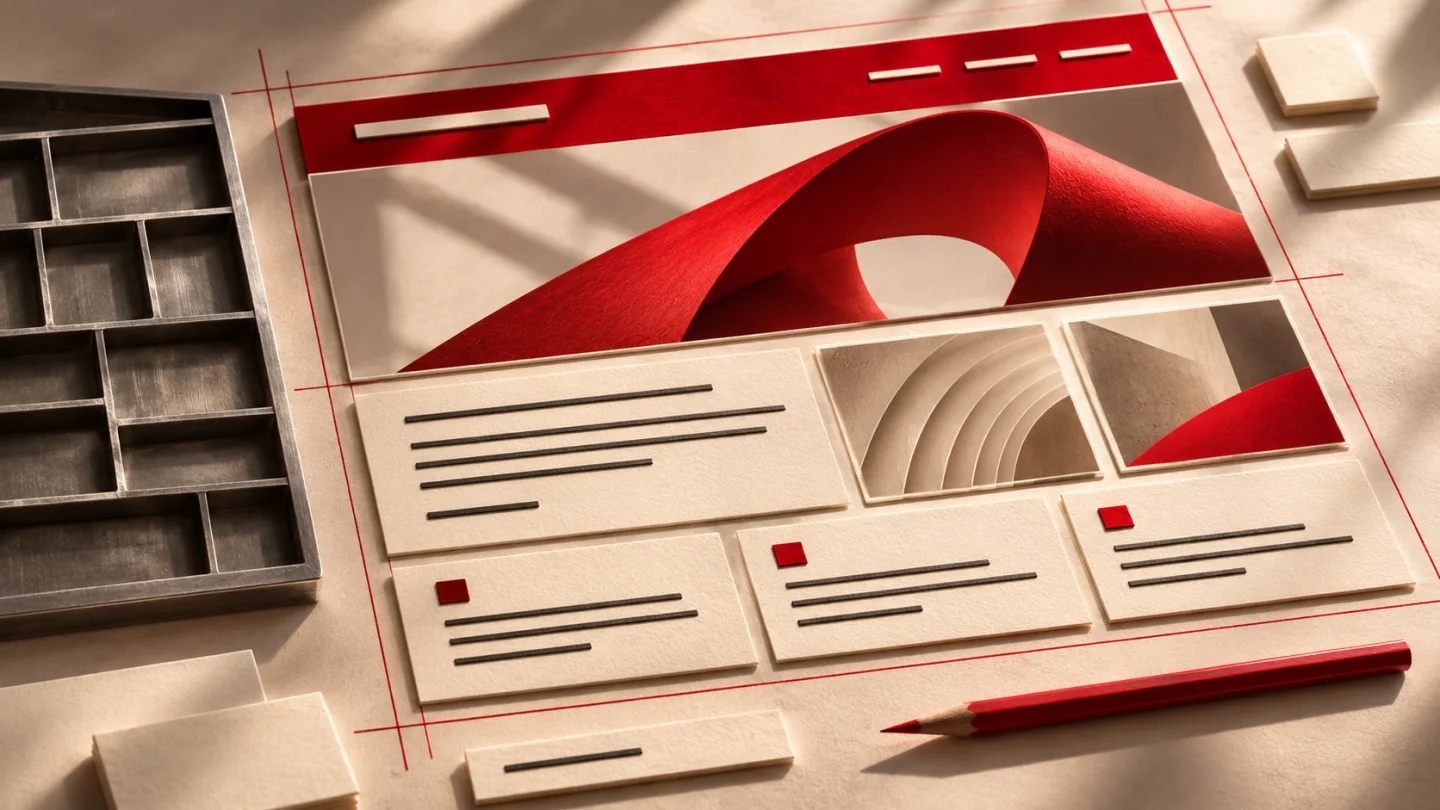
Agentur Zentral no longer uses Contao as the basis for new projects. We are building on our own development foundation and using AI throughout the work: to explore ideas, prepare content, implement functionality, investigate problems and support checks. The purpose is to connect a business need more directly with a working result.
For us, the decisive question is what a client needs to achieve. Sometimes that is a clear company website. Sometimes it is an application, a product experience or a connection between several services. A content management system can be part of that solution. It should not automatically define its boundaries.
Does this mean CMS platforms will soon be dead? Content management will remain necessary. The assumption that every digital project must revolve around a conventional CMS is what we are challenging. This article explains our decision, the evidence from our projects and the responsibilities that come with it.
Updated analysis: 4 November 2026. The examples describe the project state reviewed for this update.
Why leaving Contao is a strategic decision
We are not claiming that Contao prevents individual design or cannot support demanding websites. Its documented permissions system offers detailed control over editorial access. Its template system supports custom presentation and its release plan distinguishes development, active support and security support. Those are meaningful strengths.
Our priorities have changed. We want to develop the visible experience, content structure and application logic together. We also want reusable work to become part of a foundation we can improve directly. A project should begin with its intended outcome rather than with the question of how that outcome maps onto one particular CMS.
It is possible to develop custom extensions around an established platform. We have chosen a different allocation of effort: investing in a shared foundation designed around our own way of working. That is an architectural and business decision. It is not evidence that the alternative is unsuitable for everyone.
What our own foundation actually is
Our internal website builder supplies recurring capabilities such as pages, media, navigation, language versions and protected editorial access. Additional modules can support a journal, contact forms or newsletters where the project requires them. Individual presentation and specialist functions are developed for the particular task.
The foundation does not impose one visual template on every client. It also does not turn every new request into a completely separate implementation of basic administration. Reuse belongs underneath the experience. The visible result should have its own character.
This is not a builder subscription that we sell to clients for them to assemble a website themselves. It is our tool for providing conception, design, development and ongoing improvement. Clients can receive an appropriate editing interface without having to become developers.
Strictly speaking, this foundation also performs CMS functions. It manages content, languages and publication. Calling it a builder does not remove those responsibilities. Our departure from Contao is a move away from a particular platform and a CMS-first approach, not away from the need to manage information.
The practical advantages we are pursuing
A shared foundation with individual outcomes
A familiar navigation structure, image handling or editorial function does not need to be reinvented for every project. We can reuse the underlying capability while creating a different information architecture, visual language and interaction. That leaves more of the project conversation available for the offer, the audience and the actual user journey.
A shorter route from feedback to a reviewable result
Feedback can be specific: an animation stutters, a mobile layout feels crowded, a picture misses the subject or a reference filter uses the wrong view. AI can help inspect the relevant implementation and prepare a change in the same working context. We can then examine the result and refine it.
This reduces hand-offs within our chosen workflow. It does not prove a fixed reduction in project duration. Difficult design decisions, unclear requirements and technical defects still take time. The useful change is the closer connection between discussion, implementation and verification.
Websites and applications can be planned together
A website can explain a product while an application performs its core task. Shared terminology, design decisions and interfaces can connect those experiences. We do not need to treat the website as the only product and every other function as an accessory.
That does not mean a Windows application, Android app and PHP website are the same codebase. They have different requirements and release processes. The advantage lies in coordinating them around one purpose.
Direct influence over implementation and maintenance
We can decide which features to expose, which assets to deliver and how a specific interaction behaves. When a recurring issue appears, we can improve the common foundation and assess where that change belongs. We do not need to wait for a particular theme author to implement every design decision.
We still depend on languages, libraries, hosting and development tools. Owning more of the implementation moves responsibility towards us. It does not make dependencies disappear.
An accessible starting point for smaller projects
Reusable groundwork is part of how we can offer individual website creation from €499 net. That is a starting price for an agreed scope, not a promise that every website, migration or application costs that amount. Content, languages, functions and ongoing services must be defined in the offer. The value is a professional starting point with room to develop.
What our projects demonstrate
Our portfolio makes the approach inspectable. It is stronger evidence than a claim that AI can generate a plausible first screen. Four examples show different kinds of work.
Agentur Zentral’s new website: one identity across many experiences
Agentur Zentral’s new website combines German and English, light and dark presentation, a filterable portfolio, individual service pages and a journal. Its heroes are related without being identical. Building it required repeated decisions about hierarchy, image composition, motion and mobile behaviour.
The corrections matter as much as the first concepts. Images were replaced when they failed to explain a subject. Animation was revised when it affected scrolling. Small controls and navigation received attention when their placement was wrong. The result is evidence of iteration. It is not evidence that the first AI output was ready to publish.
SPIELRABE: a distinct product world
SPIELRABE uses its raven character, floating game islands and a recognisable visual world to introduce an Android scorekeeping application. It demonstrates that a shared technical approach need not produce interchangeable websites. The brand experience is part of how people understand the product.
Couchkartell: website, Windows and Android
Couchkartell connects a distinctive website with a Windows application and an Android app for a personal film and series collection. Its website includes an interactive example library. The interfaces have separate jobs while belonging to the same product world.
This demonstrates work across several surfaces. It does not establish a sales increase or universal compatibility with every device. Those would require separate evidence.
AlarmRoutine: a concrete connection between services
AlarmRoutine connects a DIVERA 24/7 event with configured routines, including supported smart-home destinations. A practical use is switching on a light or playing a gong at home. The distinction is important: this is an automation layer, not a replacement for an operational alerting system.
Here the central question is what an event should cause. Content management helps explain the service, but it does not define the service itself.
Together, these projects demonstrate implemented variety. They do not constitute a controlled comparison proving that every equivalent project would be slower, more expensive or less capable with Contao.
What working with AI really changes
In our workflow, AI is more than a tool for producing a first draft of a paragraph. It can work with project files, prepare code changes, create visual concepts and help run checks. The important connection is between the brief and the actual implementation.
The working cycle is straightforward:
- Define the task and the expected result.
- Inspect the existing project and its constraints.
- Create or change a concrete part of the solution.
- Check its behaviour, content and appearance.
- Use feedback to correct what is not good enough.
- Publish an approved change with a recoverable previous state.
Direction and accountability remain human. A tool can produce confident explanations and still be wrong. A successful code check does not establish that the visual result works. A good screenshot does not prove that a form sends correctly. Different questions need different checks.
We bring more than 25 years of experience in developing digital solutions. We assess results in the context of the entire project: do they meet the requirements, work reliably and support further development? AI expands what we can do. Professional judgement and responsibility for the outcome remain with us.
Where the advantages stop
There is no honest universal percentage for the time or money this approach saves. We have not published a controlled comparison covering equivalent scopes, teams and quality criteria. Nor does a custom implementation become faster, more secure or more accessible simply because it is custom.
Our own foundation brings obligations: maintaining dependencies, reviewing access rules, testing changes, preserving backups and making recovery possible. Another agency needs time to understand an individual implementation. The same can apply to a heavily customised Contao or WordPress project. Documentation, understandable code and an agreed handover make continuity easier.
AI services introduce dependencies of their own, including availability, pricing and changing capabilities. Sensitive project information needs an appropriate handling policy. Generated code, images and factual claims need review. None of these issues disappears because the development conversation feels natural.
Clients should judge the outcome and the operating arrangement: who maintains it, what is included, what happens after a failure and how a future change of provider would work. Ownership and access should be agreed, not assumed from a marketing label.
What happens when a client changes agency?
A familiar CMS does not guarantee continuity
In our work, we have seen clients move to a new provider who works exclusively with WordPress. Rather than continuing the existing implementation, that provider rebuilds the website in their preferred system. The name of the previous CMS does not prevent that decision. The next provider’s skills and working methods matter too.
Continuing the existing code and recreating the existing website on another foundation are two different routes. Which makes more sense depends on the condition of the project, the required functionality and the incoming agency.
The website can move to a different technical foundation
We use that second route ourselves. When clients bring a Contao, WordPress or other website to us, we can rebuild it in our own website builder while closely reproducing its visible design and content. Our experience is that AI-assisted implementation can make this work very quick. That does not mean every extension or internal process transfers automatically. Forms, integrations, editorial workflows and existing URLs still need to be checked and deliberately carried over or replaced.
Other agencies with the relevant skills can take a comparable approach. They do not have to adopt our builder to recreate and develop a client’s website on their own foundation. The necessary rights, content, assets and access must be available. For clients, a clear handover arrangement therefore matters more than a promise that every future provider will use the same technology.
Reassess after four to six years
From our project experience, a website that is four to six years old often deserves a fundamental review. The business, its offer, visual expectations and technical requirements may have moved on. A fresh approach can then be more worthwhile than preserving every decision made years earlier.
Age alone does not make a website unsuitable. A well-maintained website that still serves its audience can remain useful for longer. The decision should compare the value and cost of continued development with a rebuild. A change of agency can be a good moment to make that comparison.
Our conclusion: a provider change should be planned around the actual website and the client’s next goals. Direct maintenance, migration and a new design are legitimate options. None is determined by the CMS label alone.
Will CMS platforms become obsolete?
Our forecast is that the conventional CMS interface will become less central to many workflows. We do not predict the disappearance of content management. No reliable deadline can be given for the end of an entire software category.
Structured content, permissions, revisions, language relationships and publication rules are valuable precisely when more tools can make changes. Someone still needs to know which information is authoritative, who may alter it and what has been published.
Established CMS ecosystems are also adopting AI. Drupal’s AI project, for example, provides a foundation for connecting models and automating content workflows. AI and CMS are therefore not mutually exclusive choices. AI can also be used while developing for Contao.
The weaker position is a workflow whose main value is repeatedly translating simple intentions into manual administrative steps. We expect more of that work to be prepared through natural-language requests, interfaces and task-specific tools. Whether the underlying system is a traditional CMS, a headless content service or a custom foundation will depend on the project.
The shift is from managing screens towards managing reliable outcomes. That is a strategic interpretation, not a measured prediction of market share.
What being a pioneer should mean for Agentur Zentral
Using AI does not establish a leadership position. Neither does having a proprietary tool. We make no claim to be the first agency to work this way or to have invented AI-assisted development.
Our claim has to be practical: we are applying the approach to our own foundation and real projects, exposing the results to scrutiny and improving them when they fall short. We connect brand, content, websites, applications and automation in the same project thinking.
Being ahead should mean accepting the work behind a new possibility. That includes correcting an impressive animation when it performs poorly and replacing an attractive image when it communicates the wrong thing. The novelty matters only when it survives those decisions.
For clients, the relevant promise is an agency that can turn a concrete task into an individual solution and remain accountable for the result. The evidence is in the work, not in a superiority label.
What comes next
We see three useful directions. First, editorial work can become more closely connected to the page being edited. Second, assistants can prepare broader changes while previews, permissions and revision histories keep them reviewable. Third, websites can connect more naturally with the applications and services people already use.
These are directions for development, not a claim that every capability is already included in every project. The aim is not unlimited automation. It is less repetitive work with clearer responsibility for the actions that matter.
As tools improve, implementation may become easier to initiate. That makes sound requirements, recognisable design, dependable operation and critical review more important. Producing more output is useful only if people can trust and use it.
What this means for an existing website
Our decision is not an instruction to replace a functioning Contao installation. A team with an established editorial process and suitable support may have good reasons to keep it. Our earlier reference projects remain part of our experience.
A migration becomes worth evaluating when there is a concrete reason: a changed offer, a new workflow, a maintenance issue or a necessary redesign. It should account for content, URLs, redirects, language versions, forms, permissions and ongoing operation. New technology alone is not a business case.
We have chosen our direction: an agency-owned foundation, individual experiences and a close connection between human judgement and AI-assisted implementation. The future we are building still manages content. It simply starts with a larger question: what should your digital solution make possible?