

SEO in 2026: staying visible in Google and AI search
Why traditional rankings are no longer enough, and what matters for AI Overviews, ChatGPT and Perplexity
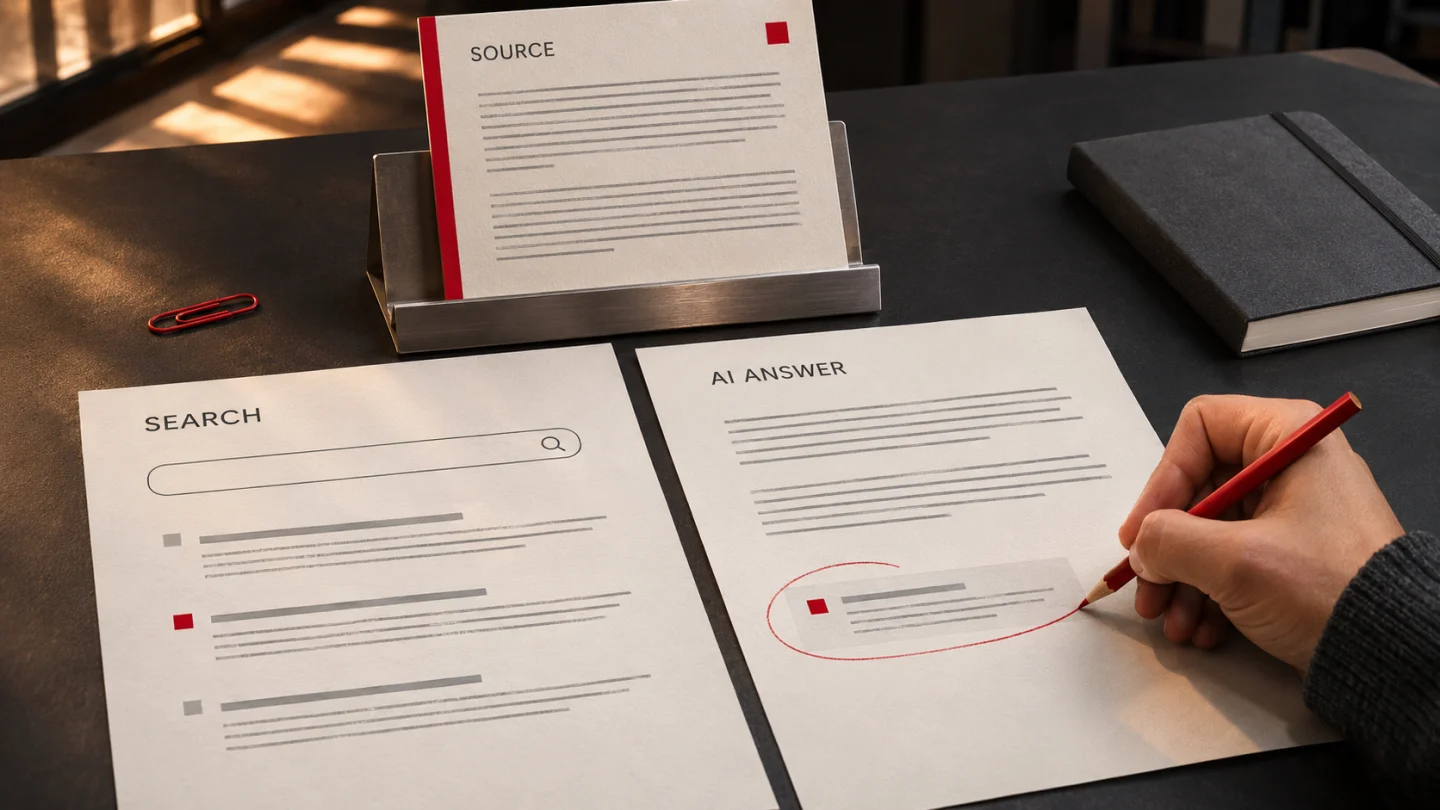
A trades business examines its figures. Rankings are unchanged, positions have even improved slightly, yet Google is bringing 30 per cent fewer visitors. The reason sits at the top of the results page: an AI Overview already answering the question. People who no longer need to click do not click.
In brief: Search engines increasingly deliver answers, while assistants such as ChatGPT and Perplexity become starting points themselves. Traditional SEO remains an important foundation. This article explains AI Overviews, the idea behind Generative Engine Optimization and technical access to content. Inclusion or placement in AI answers cannot be guaranteed.
AI Overviews: answers instead of a results list
AI Overviews are answer blocks that Google compiles from multiple sources and displays before traditional results. Various analyses paint a clear picture for 2026: around half of all searches now show such an overview, with an even higher share for informational and how-to questions. A growing proportion of search sessions therefore ends without a click to an external site because the requested information appears directly in the results.
The value of an individual visit is changing too. People who continue clicking after an AI Overview have usually already informed themselves and arrive with a more specific interest. Looking only at click counts is therefore insufficient.
Traditional SEO remains the foundation
This does not make search engine optimisation less important. AI Overviews draw on content that is technically sound, relevant to the topic and trustworthy. However, pages cited in AI answers increasingly differ from those holding the top traditional positions. In early 2026, only around one in four or five cited pages also appeared among the leading organic results. AI-search visibility therefore follows some rules of its own.
GEO: appearing in the answer, not just the index
A term has emerged for these new rules: Generative Engine Optimization, or GEO. It means deliberately preparing content so systems such as Google AI Overviews, ChatGPT, Gemini and Perplexity use and cite it as a source. Traditional SEO targets rankings; GEO aims to make content part of the generated answer.
Several factors increase the likelihood of being cited. Research into generative search particularly highlights:
- Answer first: Put the core statement at the beginning, briefly, clearly and understandably without additional context.
- Evidence-backed facts: Specific figures, studies and dated sources are cited unusually often.
- Clear structure: Descriptive question headings, short paragraphs and FAQ sections are easy for machines to read.
- Subject expertise: Comprehensive, meaningfully linked content signals competence in a topic.
- Freshness: Regularly maintained articles are preferred; a large share of cited sources is only a few weeks old.
- Technical foundations: Structured data using Schema.org, clean semantics and fast loading make content easier for machines to understand.
The following examples illustrate readable content structure, question-and-answer markup and separate controls for search access and model training. They do not guarantee citation. According to Google Search Central, no special Schema.org markup is required for its generative search features.
<h2>What belongs in a website relaunch?</h2>
<p>A website relaunch includes a content audit, structure, design, implementation and a joint review.</p>
{
"@context": "https://schema.org",
"@type": "FAQPage",
"mainEntity": [
{
"@type": "Question",
"name": "What belongs in a website relaunch?",
"acceptedAnswer": {
"@type": "Answer",
"text": "A website relaunch includes a content audit, structure, design, implementation and a joint review."
}
}
]
}# Example: allow search, separately exclude training
User-agent: OAI-SearchBot
Allow: /
User-agent: GPTBot
Disallow: /OAI-SearchBot controls ChatGPT search, GPTBot potential training access. The settings are independent. According to OpenAI Docs, blocking OAI-SearchBot excludes search answers; navigational links remain possible. Allowing access guarantees no mention. CDN and firewall settings must permit the intended access.
In practice: 25 per cent less traffic, but more enquiries
A typical scenario showing how such a case unfolds; the figures are illustrative.
A warehouse-equipment supplier loses around a quarter of its organic visits over six months despite stable rankings. Analysis reveals a pattern: the losses almost exclusively affect informational questions, such as “How much load can a shelving unit carry?”, rather than searches close to purchase. These are precisely the questions Google now answers itself.
The business responds by changing structure rather than adding more copy:
- Every guide begins with a direct answer in two sentences, followed by the reasoning.
- Technical questions from the sales team become a genuine FAQ, marked up as FAQPage and using the same wording customers use.
- Each topic gains original data: measurements from the test laboratory, load tables and photographs from client projects. No AI can invent that evidence.
- The intended search crawlers remain permitted. Access for model training is decided separately.
After around four months, the result appears in two trends. Purely informational visits do not return, but enquiries through purchase-oriented pages rise, and the supplier appears as a source in AI answers together with its load table. The lesson: traffic is not the goal. Being mentioned and receiving enquiries is.
What to do now
The transition can happen gradually. A sensible first step is an inventory: which important search terms already show AI Overviews, and does your website appear as a source? Key pages then benefit from an answer-first structure, supported statements and clear organisation. Metrics also deserve a broader view. Alongside rankings and clicks, attention shifts to how often content appears in AI answers and how valuable the remaining visits are.
Conclusion: two disciplines, one craft
AI search expands good SEO rather than replacing it. Understandable, well-founded and current content positions a website well for traditional rankings and AI answers alike. Technical optimisation, a maintainable technical foundation, thoughtful content and targeted use of AI work together.
Frequently asked questions
Short answers to the key questions about SEO and AI search:
What are Google AI Overviews?
AI-generated answer blocks that Google compiles from multiple sources and displays above traditional search results.
Does this make traditional SEO redundant?
No. Technically sound, relevant and trustworthy content remains the foundation and also serves as a source for AI answers.
What does GEO mean?
Generative Engine Optimization: preparing content so AI systems cite it as a source.